Geotechnicalengineering1
ORANGE CALIFORNIA
HomeImprovementUnsaturated Soil Analysis

Unsaturated Soil Analysis in Orange California

Knowledgeable. Thorough. Resourceful.

LEARN MORE

The difference between the alluvial fans near the Santa Ana River and the older terrace deposits around Villa Park is night and day when it comes to moisture behavior. In Orange California, shallow groundwater is rare, but seasonal rainfall creates transient perched conditions that drive volume change in expansive clays. That is where unsaturated soil analysis becomes essential. We routinely see the upper 5 to 8 meters of the profile sitting at negative pore pressures, and without proper characterization, any foundation design underestimates heave and collapse potential. Before we run a full analysis, a representative sampling of undisturbed block samples is critical for preserving in-situ fabric.
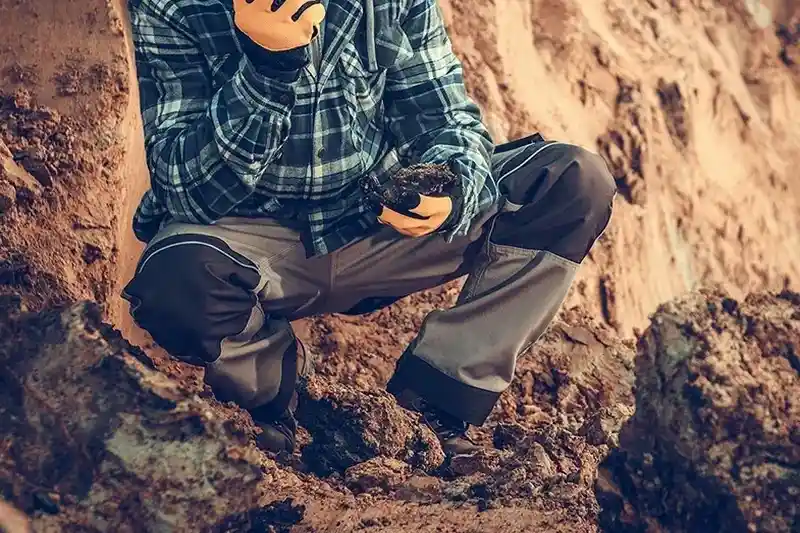
Illustrative image of Unsaturated soil analysis in Orange California
The upper 5 to 8 meters in Orange California are almost always unsaturated — ignoring that means underestimating heave and collapse by a wide margin.

Our service areas

Process overview

Orange California sits at an average elevation of 60 meters above sea level, with a Mediterranean climate that delivers roughly 330 mm of rain per year concentrated between November and April. That pattern keeps the vadose zone active for months. Our unsaturated soil analysis measures the soil-water characteristic curve (SWCC) using the WP4C dewpoint potentiometer and Tempe cells, covering suction from 0 to 300 MPa. We also determine the unsaturated shear strength parameters through a modified triaxial setup with controlled suction. The data feeds directly into our settlement prediction models for differential movement on residential slabs and commercial floor slabs. Key parameters we evaluate include:
  • SWCC fitting parameters (van Genuchten α, n, and residual saturation)
  • Unsaturated hydraulic conductivity (k-function)
  • Air-entry value and desorption rate
  • Collapse potential under wetting
Technical reference — Orange California

Local context

Our field crew rolls out with a Giddings hydraulic probe mounted on a flatbed truck, capable of pushing thin-walled Shelby tubes to 10 meters in the sandy loams and silty clays typical of Orange California. The real challenge is preserving the in-situ moisture content during transport. We seal each tube immediately with wax caps and store them in temperature-controlled coolers. Once in the lab, the first step is verifying the matric suction with a filter-paper test per ASTM D5298. If the sample shows signs of desaturation during handling, we discard it and request a resample. That level of rigor is the only way to get reliable unsaturated parameters for foundation design.

Need a geotechnical assessment?

Reply within 24h.

Email: contact@geotechnicalengineering1.biz

Regulatory framework


ASTM D6836-16 (SWCC determination), ASTM D5298-16 (filter paper suction), ASTM D4767-11 (CIUC triaxial, adapted for unsaturated), IBC 2021 Section 1803 (geotechnical investigation)

Technical parameters

ParameterTypical value
Suction range (WP4C)0 – 300 MPa
SWCC fitting modelvan Genuchten (1980) / Fredlund-Xing
Unsaturated shear strengthModified triaxial with controlled suction
Collapse potential threshold≥ 2% under 200 kPa surcharge
Hydraulic conductivity range10⁻⁶ to 10⁻¹¹ m/s (unsaturated)
Sample preservationWax-sealed block samples per ASTM D4220

Q&A


What is the difference between saturated and unsaturated soil analysis?

Saturated analysis assumes full water saturation and positive pore pressures, while unsaturated analysis accounts for negative pore pressures (suction) that exist above the water table. In Orange California, where the water table is typically deeper than 15 meters, the upper soil profile is unsaturated for most of the year. Unsaturated analysis predicts volume change, shear strength, and hydraulic behavior under partial saturation, which is critical for expansive clays and collapsible silts.

How much does unsaturated soil analysis cost in Orange California?

The typical cost ranges from US$1.170 to US$3.210 depending on the number of suction points, SWCC curve fitting, and triaxial setups required. A basic SWCC with 6 suction points and van Genuchten fitting falls on the lower end, while a full program including unsaturated shear strength and collapse testing approaches the upper end. Volume discounts apply for multi-borehole projects.

Which ASTM standards apply to unsaturated soil testing?

The primary standards are ASTM D6836 for SWCC determination, ASTM D5298 for filter paper suction measurement, and ASTM D4767 for triaxial testing (adapted for controlled suction). For collapse potential, ASTM D5333 applies. All testing follows the calibration and QA/QC requirements of ISO 17025, and our laboratory holds current accreditation for these methods.

How long does a full unsaturated soil analysis take?

A complete SWCC with 6 suction points typically requires 4 to 6 weeks due to the equilibration time at each suction step. If unsaturated shear strength testing is included, add another 3 to 4 weeks. We provide interim reports with preliminary SWCC data after the first two weeks so design decisions can start before the final report is issued.

Location and service area

We serve projects across Orange California.

Location and service area