Ground improvement in Orange, California represents a critical branch of geotechnical engineering focused on altering the physical and mechanical properties of soil and rock to meet project requirements. Given the region's complex geological history, which includes alluvial plains, ancient marine terraces, and proximity to active fault zones, the native soils often lack the strength, stiffness, or permeability characteristics needed for safe and durable construction. This category encompasses a suite of advanced techniques designed to mitigate settlement, enhance bearing capacity, reduce liquefaction potential, and control groundwater flow, ensuring that infrastructure—from residential developments to major transportation corridors—performs reliably over its design life. Without proper improvement, the variable and often problematic subsurface conditions in Orange County can lead to costly structural distress, differential settlement, and even catastrophic failure during seismic events.
The local geology of Orange, situated within the Peninsular Ranges geomorphic province, presents specific challenges that make ground improvement indispensable. Much of the city and its surroundings are underlain by Holocene-age alluvium consisting of loose sands, silts, and clays deposited by the Santa Ana River and its tributaries. These deposits are frequently interbedded with layers of high-plasticity clay and can be saturated at shallow depths, creating conditions ripe for liquefaction and excessive long-term settlement. Additionally, the presence of artificial fill from decades of agricultural and urban development adds another layer of unpredictability. The region's seismic setting, influenced by the nearby Newport-Inglewood and Whittier fault zones, demands that engineers rigorously address cyclic loading and ground deformation risks. Understanding these local conditions is the foundation upon which any effective ground improvement strategy is built.
Regulatory compliance in Orange is governed by a combination of national standards and local ordinances that shape every improvement design. The California Building Code (CBC), which adopts and amends the International Building Code (IBC), provides the primary framework, with Chapter 18 specifically addressing soils and foundations. Crucially, the CBC incorporates ASCE 7 for seismic design parameters, requiring site-specific ground motion analyses for projects on Site Class D, E, or F soils—common in the area. Local agencies, such as the City of Orange Public Works Department, enforce additional grading and drainage requirements, often mandating third-party peer review of geotechnical reports. For projects involving chemical stabilization or deep mixing, adherence to Caltrans specifications and FHWA guidelines is typical, while environmental oversight from the Regional Water Quality Control Board ensures groundwater protection during activities like Deep Soil Mixing (DSM) design or lime and cement stabilization.
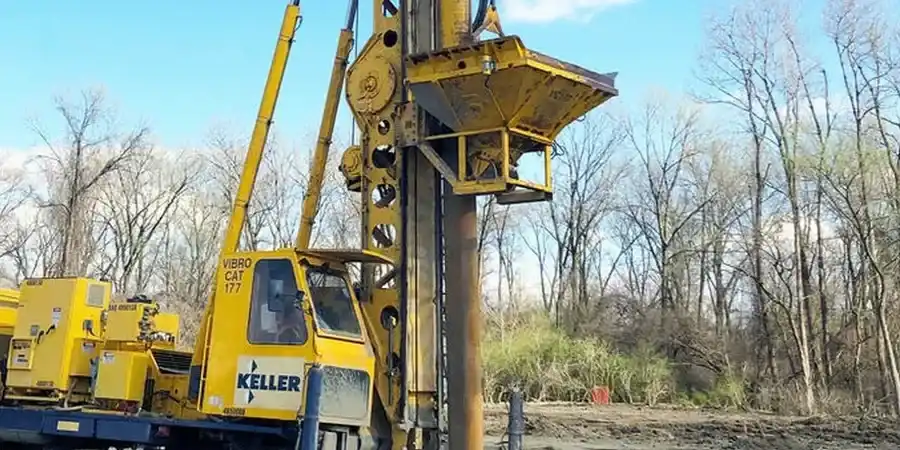
The range of projects requiring ground improvement in Orange is vast, reflecting the region's dense urban fabric and ongoing infrastructure demands. New commercial and industrial buildings on previously undeveloped or agricultural land often necessitate preloading design (without surcharge) or prefabricated vertical drain (PVD) design to accelerate consolidation of compressible clays. Transportation infrastructure, including bridge approaches and roadway embankments, frequently relies on vibrocompaction design to densify loose granular soils and mitigate liquefaction. Environmental projects, such as landfill closures and expansions, demand specialized landfill geotechnics for liner stability and gas management. Across all these applications, geotechnical instrumentation (design and installation) provides the performance verification essential for quality assurance. Even the analysis of partially saturated soils near the ground surface, through unsaturated soil analysis, plays a key role in predicting shrink-swell behavior and slope stability during the rainy season.
The primary goal is to modify native soil properties to ensure structural safety and serviceability. In Orange, this typically means mitigating liquefaction risk in loose alluvial sands, accelerating settlement to prevent post-construction damage, and increasing bearing capacity to support foundations on compressible clays and artificial fill, all while complying with the California Building Code and local seismic design requirements.
Orange's subsurface is dominated by interbedded alluvial sands, silts, and high-plasticity clays with shallow groundwater. Loose, saturated sands demand densification techniques like vibrocompaction for liquefaction mitigation, while thick clay layers often require preloading with PVDs to accelerate drainage. The presence of reactive clays may necessitate chemical stabilization to control shrink-swell behavior.
Projects are governed by the California Building Code (CBC), which adopts the IBC with state-specific amendments, particularly for seismic design per ASCE 7. Local enforcement by the City of Orange includes grading ordinance compliance and peer review of geotechnical reports. Environmental regulations from the Santa Ana Regional Water Quality Control Board also apply when chemical binders or deep mixing may affect groundwater.
A site-specific analysis is required by the CBC when a project is located on Site Class D, E, or F soils, which are prevalent in Orange's alluvial basins. This analysis determines design ground motions accounting for local amplification, basin effects, and proximity to faults like the Whittier-Elsinore system, directly influencing the performance criteria for liquefaction mitigation and dynamic settlement control.